
5 examples of Augmented Reality for city marketing
Augmented Reality is perfect for making the invisible visible. In the world of tourism, this is incredibly exciting. You can offer visitors extra information at the location where they are at that moment. In this way, you create more depth, for example by giving directions or showing an image that is not present in 'real' life. Augmented Reality makes it possible to add an extra layer of experience to a location. Sounds all nice, but also difficult and complicated...but it doesn't have to be! Check out 5 examples of Augmented Reality that can be used for city marketing.
Example 1: Gamefication
The most ultimate example of Augmented Reality is Pokemon Go, the first Augmented Reality application to be widely used (by consumers). No difficult devices, just the mobile phone you have in your pocket anyway. Through the Pokemon Go application, it is possible to catch Pokemons "in the real" world. Because you look through the screen of your phone, you see digital pokemons walking in the real world. In this way, you connect the real world with the digital world.
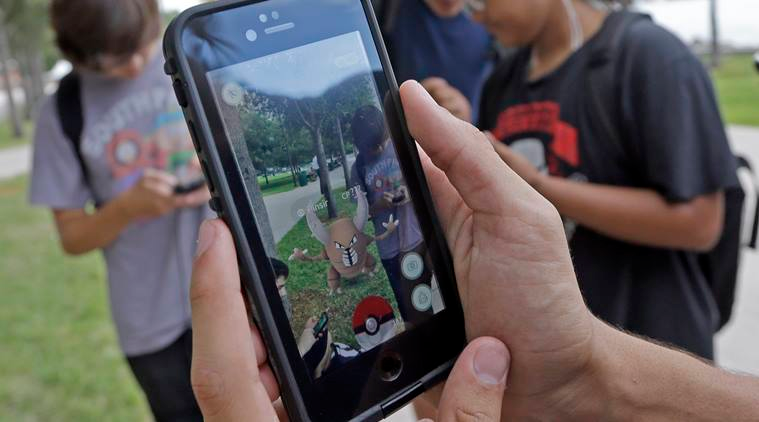
Pokemon Go in action
You could see them from afar...groups of Pokemon catchers in locations where you wouldn't normally expect people. In the light of city marketing, it is of course the ultimate way to guide visitors to a special location by means of virtual hotspots. Combine that with a game element, bonus points, loyalty concepts and you no longer need your city guide. Enhance that with a social element, so that you can "unlock" a "special" with several people, and you connect people. And isn't that what travelling is all about: exploring and meeting other people/cultures?
Example 2: Back in time
How nice would it be if you could show what a location used to look like? This principle can be applied indoors, for example, by bringing "lost" castles back to life via Augmented Reality.

Histopad domaine national de Chambord
Or consider the Roman Limes in the Netherlands. How nice it would be to bring the Roman army camp back to life in a virtual world, for example. This would make walking a route much more interesting.
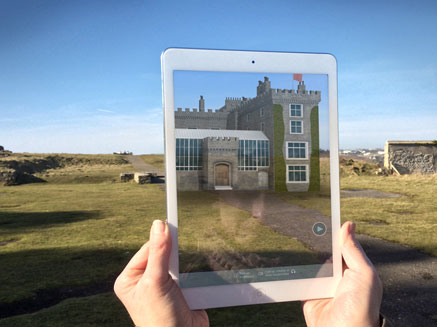
Artist impression of lost castle.
Example 3: Under the ground
And what about what is going on underground? In Amsterdam, Rotterdam and The Hague, it is possible to take a look "under the ground" through Augmented Reality. A great example where the underground has actually been made visible is DomUnder in Utrecht. Here, visitors can take a guided tour under the Dom Square and learn more about its rich history.
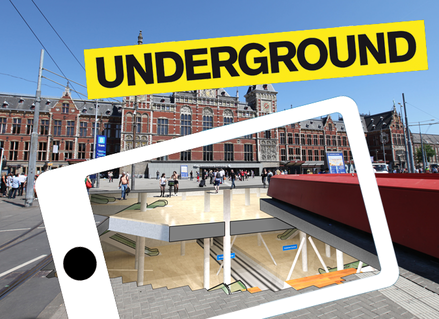
Example of UAR Underground Amsterdam Central Station
But there are of course plenty of examples where this is less easy to achieve. This is where Augmented Reality can be a solution. Using 3D models, an image can be created exactly at the right location "underground". The visitor looks through the screen of his phone right through the ground, an amazing experience!
Example 4: What's nearby
The first application of augmented reality to be used by a large group of users is Layar. Through an app, a layer is placed over your camera image, revealing location data.
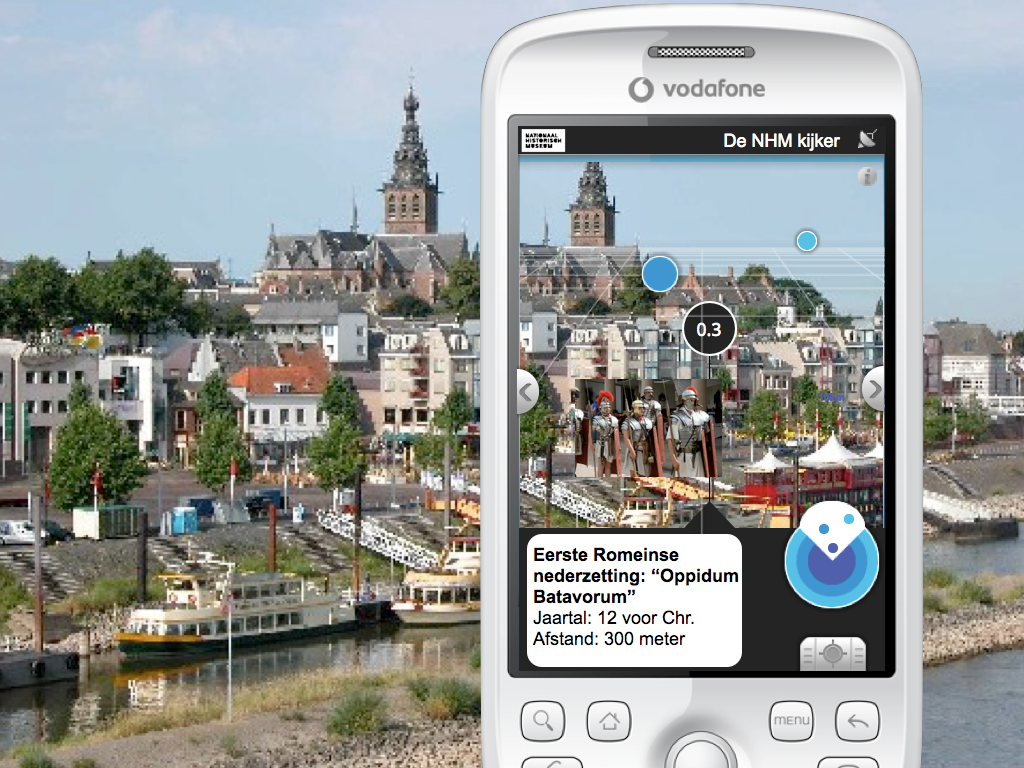
Example of a National History Museum app
The moment you look through the screen of your phone, you see dots of nearby locations appearing everywhere.
Example 5: Virtual route navigation
With the latest techniques, it is also possible to show your route virtually in the real world. That way, you never have to read directions, determine your position on the map or follow a left/right arrow again. You look through your screen and see exactly which paths to follow.
Apple's ARKit
In autumn 2017, Apple's iOS11 will be released with a host of new features. One of the most spectacular additions we are eagerly awaiting is ARKit. Through this augmented reality kit, it is possible to lay a digital layer over the real world (as long as you look through your phone's screen, of course). The big advantage of ARKit, is that this functionality becomes available by default on all iOS devices (iPhone, iPad) running on the latest version of the operating system. So you no longer need expensive devices like the Oculus Rift or the HTC Vive. Bringing an extra pair of glasses like the Google Cardboard or the Samsung Gear is also no longer necessary.